Understanding concrete pool resurfacing
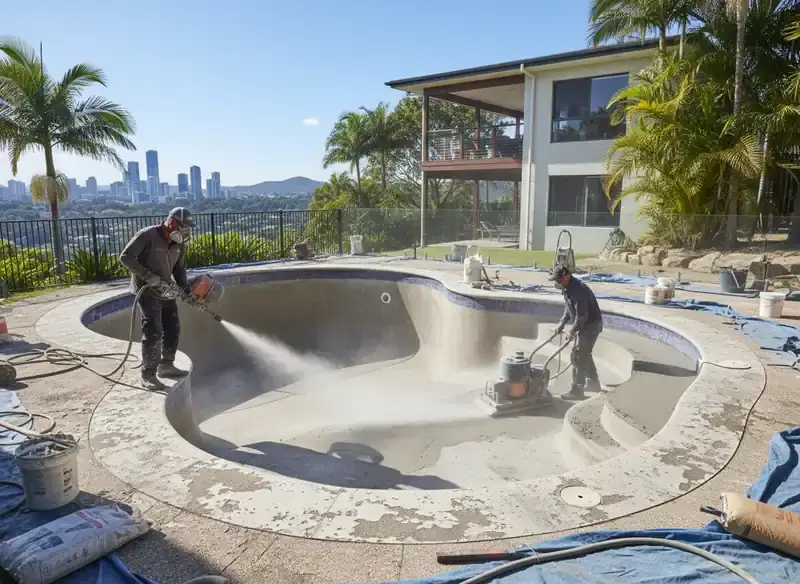
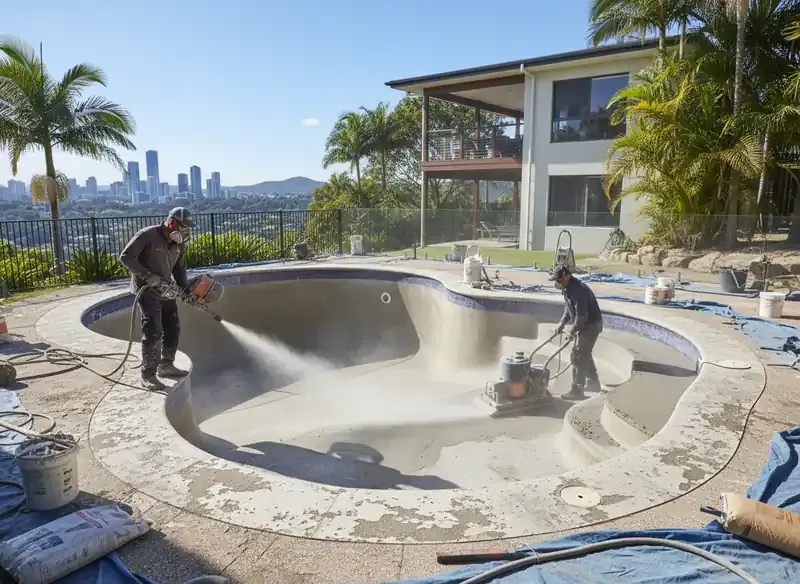
Resurfacing prepares the worn interior of a concrete pool and applies a fresh finish over the existing shell. It suits Brisbane pools that feel rough underfoot, have stained or faded, or show fine surface cracking, while the structure underneath is still sound.
Signs a tired pool is ready for renovation
Typical signs include a sandpapery floor, blotchy staining that brushing will not shift, chalky or flaking paint, hollow sounding patches and tiles lifting along the waterline. A water level that drops faster than hot weather explains is another reason to look closer before any new finish goes on.
What resurfacing and waterproofing can achieve
A new interior can change the colour and texture of the pool, from painted coatings to tiles and other finishes. Where water is escaping, fixing the cause and adding waterproofing before the finish matters more than the look, because a fresh surface over an active leak may only hide the problem.
Resurfacing, repair or rebuild: the decision
If the shell is structurally sound, resurfacing is usually the lighter job. Cracks that run through the structure, ongoing movement or persistent leaks point toward structural repair, and a badly failed shell may justify a rebuild. Structural repairs sit under the QBCC pool construction licence, not the maintenance licence.
Why Brisbane reactive clay matters
Many Brisbane suburbs sit on reactive clay that swells after rain and shrinks through dry spells. That seasonal movement can stress an older shell and its surrounds, so cracks that reopen after patching are worth checking for structural causes before you choose a new finish.
Not sure why it is cracking or leaking?
You do not need to know the cause before asking. Write down where cracks appear, whether they have grown, and how fast the level falls with the pump running and with it off. Those notes help an on-site inspection separate surface wear from structural movement or plumbing leaks.
Contracts on renovation work
Domestic pool work over $3,300, counting labour, materials and GST, needs a written contract and generally carries a five-business-day cooling-off period. On contracts of $20,000 or more, the contractor must give you the QBCC Consumer Building Guide before you sign.
Next step for a worn concrete pool
Request a free quote here when ready, and a licensed and insured local contractor can follow up. Before then, find the pool's age if you can, note its current finish, and mark where cracks, stains or leaks show so you can decide whether looks, a leak fix or both matter most.
What concrete pool resurfacing can cover
Pool repainting
A pool-grade coating over a sound, well prepared concrete interior to refresh the colour and feel.
Interior refinishing
Replacing a rough or failing interior surface with a new finish over the existing shell.
Crack and leak repair
Finding and fixing the cause of cracks or water loss before any new finish goes on.
Pool waterproofing
Sealing the shell under the new finish so water stays in the pool.