What changes from one Brisbane suburb to the next
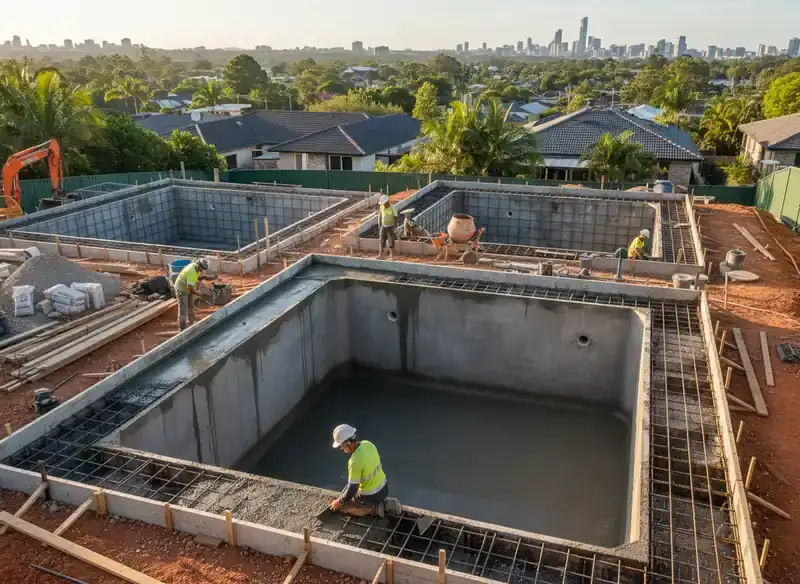
A concrete pool shell is poured to suit the ground it sits in, so two identical designs can be very different jobs a few kilometres apart. These are the local differences worth thinking about before you settle on a size or shape.
Slope and retaining
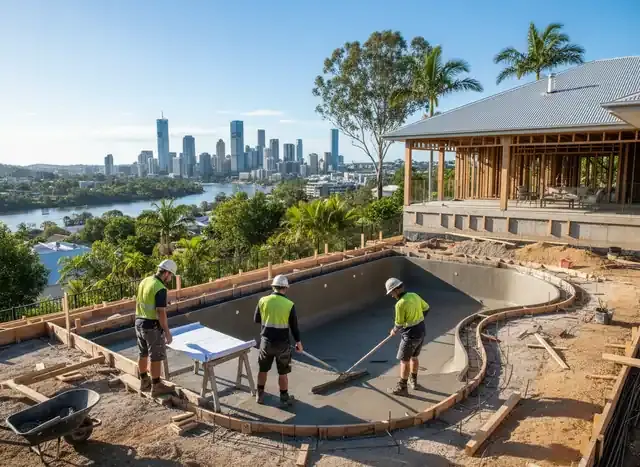
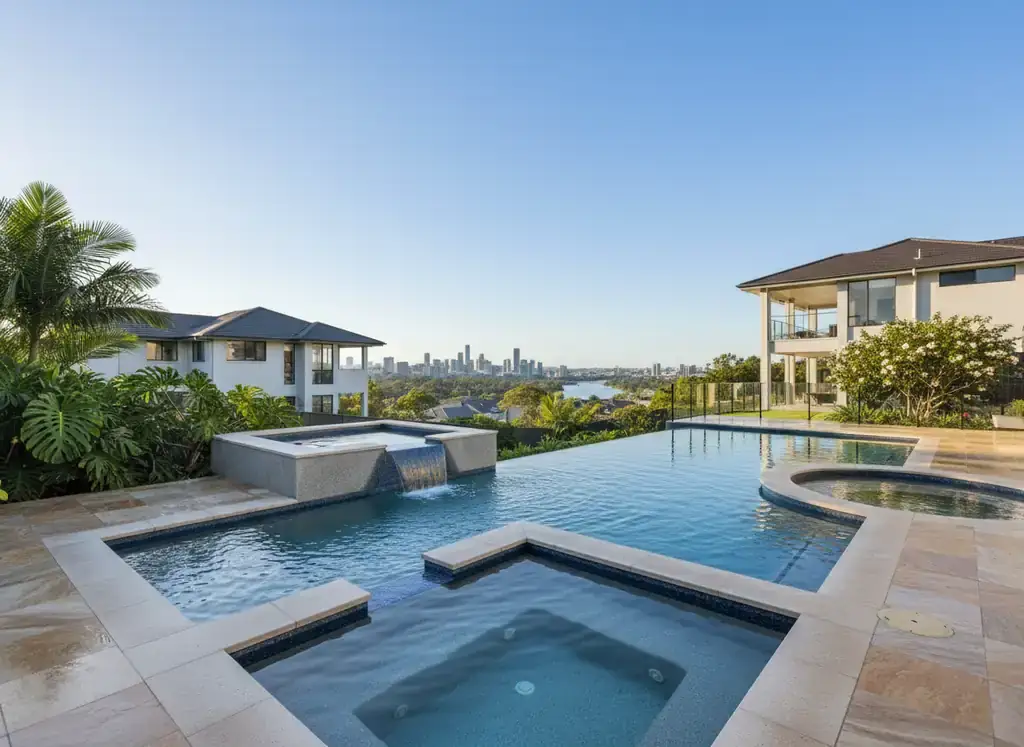
Hilly pockets in the west, such as Kenmore and Chapel Hill, often mean cutting into a slope or building the pool partly out of the ground. That can bring retaining, extra engineering and more concrete. An above ground or partly raised concrete pool is sometimes a neater answer on a steep yard than digging the whole shell in.
Access for machinery
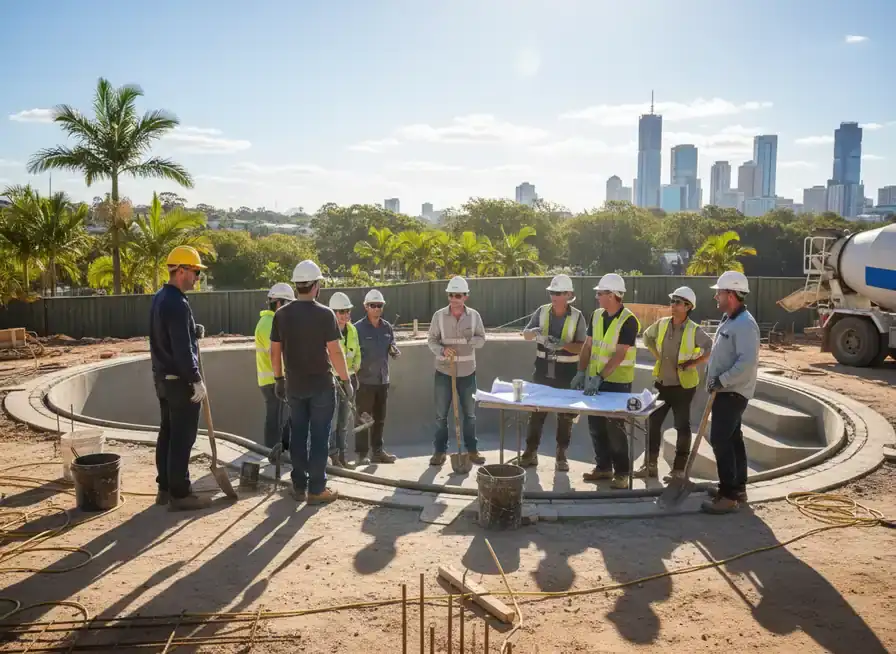
Older streets near Camp Hill and Bulimba tend to have narrower blocks and houses set close to the side boundary. Measure the narrowest gap between your house and fence before talking to a builder, because it shapes how the excavation and the concrete pour can be done.
Services under the yard
Sewer and stormwater lines often cross Brisbane backyards. Building over or near a sewer can need an approval on top of the usual building approval, so it pays to find where those lines run early. Your property plans or a council search can show them.
Bayside conditions
Closer to Moreton Bay, around Wynnum and Manly West, salt air and sandier ground are part of the picture. Ask about finishes, coping and pool equipment that cope well near the water, and how the ground will be prepared under the shell.
Matching the pool type to your block
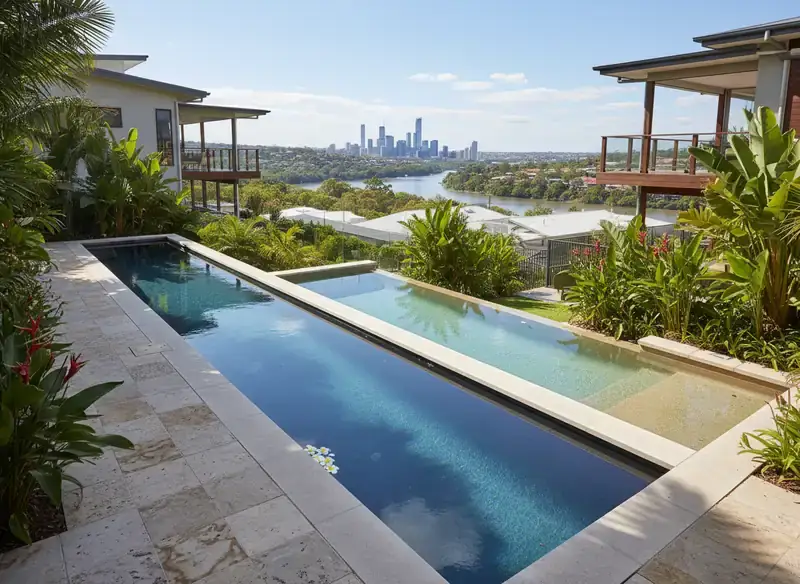
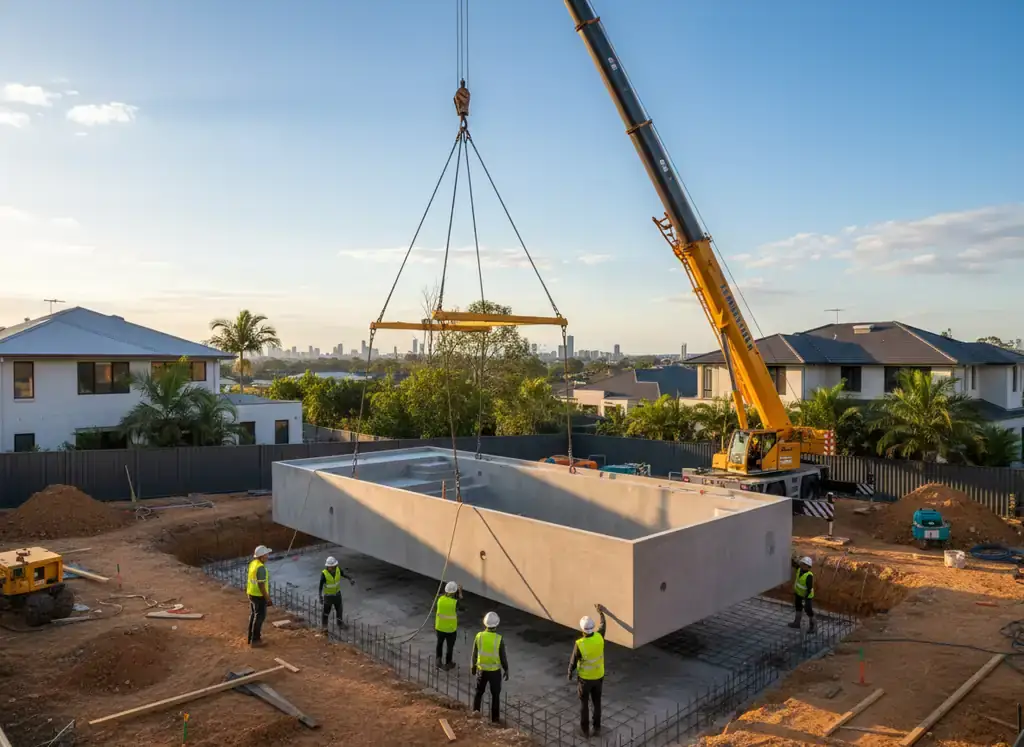
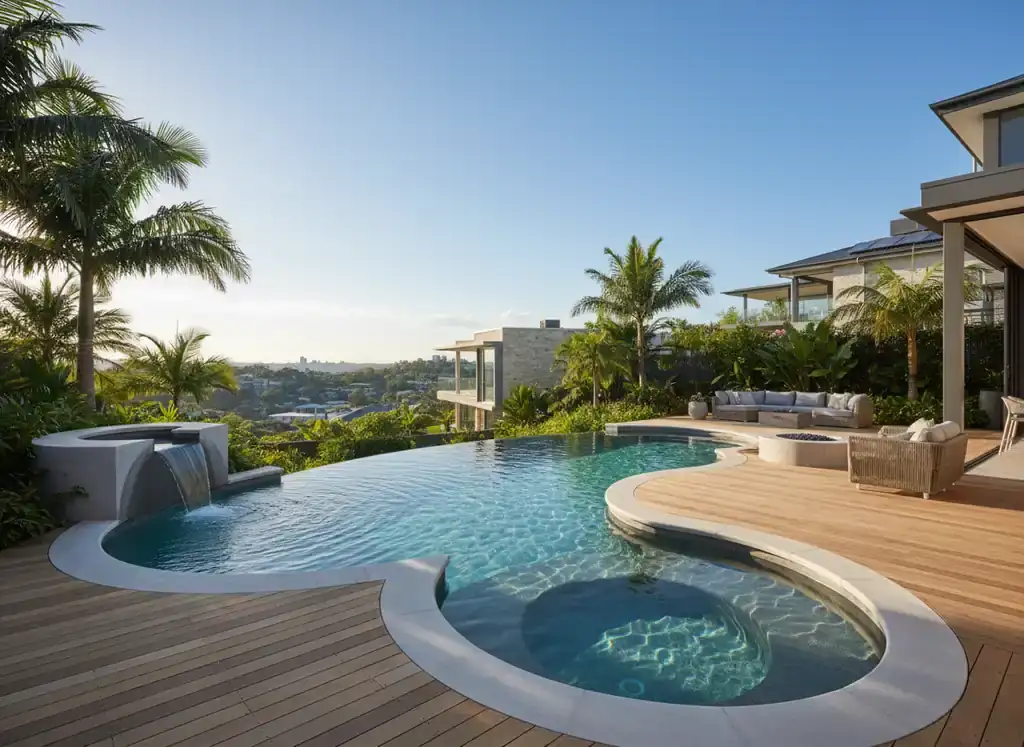
Small courtyards in established suburbs often suit a plunge pool, while long, narrow yards can fit a lap pool along one boundary. Larger family blocks in places like Bridgeman Downs or Carindale may have room for a pool and spa combination. Precast concrete shells can suit sites where a long on site build is hard to manage.
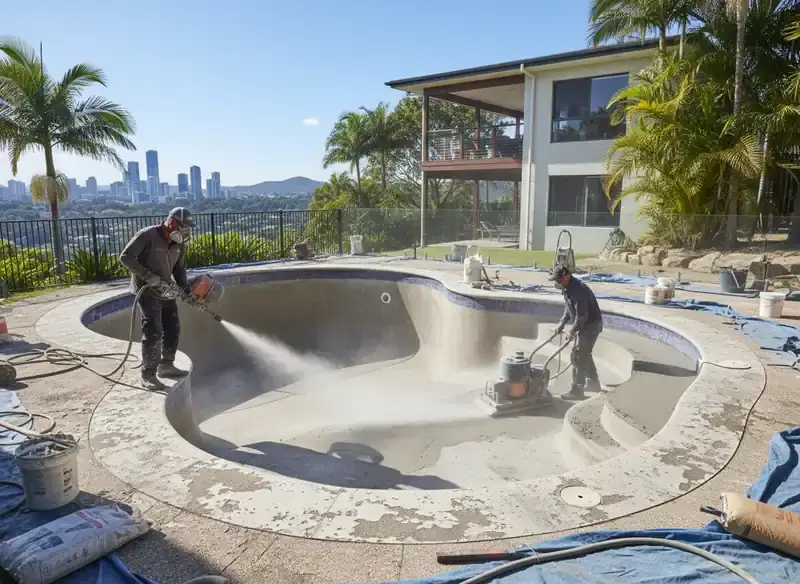
If you already have an older concrete pool, resurfacing can refresh it without starting again, whichever suburb you are in.
Before you choose your suburb page
Walk the yard and note three things: the fall of the land, the tightest access point and any pits or inspection openings that hint at buried pipes. Those details will tell you more about your pool than the postcode does, and they make any quote you get far easier to compare.